By Darian Macey, October 19 2026
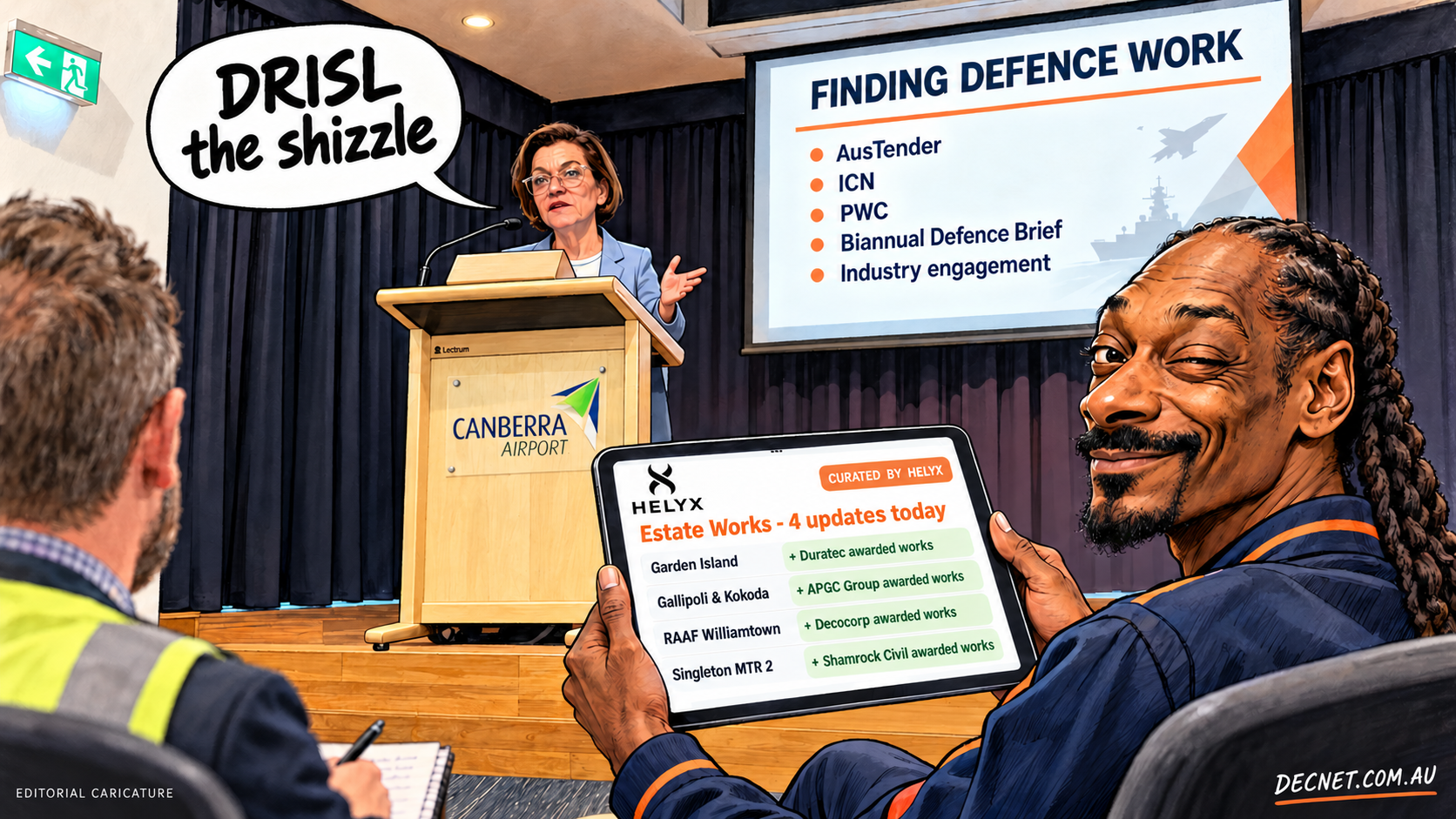
Defence’s DRISL briefing in Canberra explained how Indigenous businesses can become more visible to buyers and participate in estate projects.
But like so many other briefings of this type, questions from the floor highlighted a critical gap: a clearer view of upcoming work, who has been appointed and when to approach them.
During the discussion, one attendee asked whether a list, membership or industry body could help businesses monitor upcoming projects and the main contractors involved. Another explained that entering a new region can require at least six months to establish relationships and understand local capability.
Those questions point to an unfilled need. Suppliers need time to decide which projects suit their business, prepare their teams and build the relationships needed to deliver.
What Defence explained
Deputy Secretary Security and Estate Group Celia Perkins opened the 19 October session, followed by detailed presentations and questions with Ese Rainey, Executive Director at Capital Facilities and Infrastructure Branch, and Alice Chen of Sparke Helmore Lawyers.
The Defence Ready Indigenous Suppliers List is intended to help Defence teams and delivery contractors identify businesses with relevant capability. Defence described its intended use across major construction, estate works and PFAS activities, with capability statements shared subject to the permissions provided by suppliers.
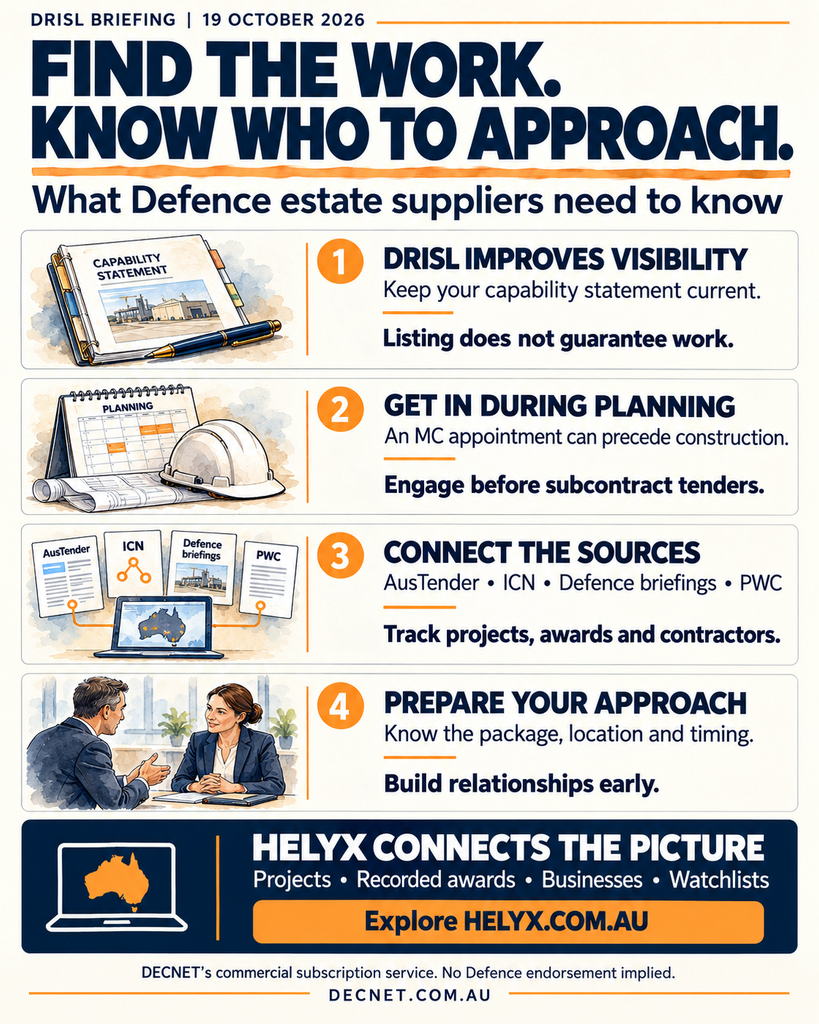
The distinction was clear: DRISL is a supplier list, rather than a procurement panel. Inclusion does not guarantee an approach, a tender invitation or an award. Suppliers still need to demonstrate capability and value for money, and keep their information current.
Defence wants that visibility to lead to more substantive Indigenous participation in construction packages. The discussion covered how participation commitments are assessed and monitored, alongside questions from suppliers about reporting accuracy and contractor accountability.
Much of the session focused on managing contractor arrangements and the commercial realities of subcontracting. The speakers emphasised understanding contract terms, accepting directions through the authorised contractual channel, supporting variation claims with evidence and checking payment and security arrangements. Defence also flagged further engagement and training through 2027, including direct procurement.
Why the planning phase appointment matters
A managing contractor appointment can be an important early signal for suppliers.
Rainey and Chen explained that an MC initially undertakes planning, design, cost development and programming. Progression into delivery is subject to further requirements and agreement. A contract award therefore needs to be understood in the context of the project’s stage.
For a subcontractor, that planning period is a chance to introduce the business, explain which packages it can deliver and contribute to market sounding. Early contractor involvement can also create opportunities to provide buildability and other specialist advice, although it does not guarantee the later construction work.
Rainey encouraged businesses to identify appointed MCs and approach them during planning. Waiting until a subcontract tender appears can leave less time to prepare or explain where a business fits.
The information gap suppliers described
Defence pointed attendees towards AusTender, ICN, its biannual industry briefings and Parliamentary Standing Committee on Public Works material.
Each provides useful information. AusTender is the official Commonwealth procurement channel. MCs commonly use ICN for market engagement and subcontract opportunities. Defence’s briefings can explain the forward programme and disclosed contractor shortlists, while Public Works Committee submissions provide project scope and delivery context.
Suppliers then need to connect those sources. A project may appear under a capability programme in one document, an EST reference in another and a package description in a contract notice. Identifying the relevant award, understanding its purpose and finding the responsible business takes further work.
The audience questions showed demand for help with that task. A supplier needs to turn scattered information into a practical decision: is this relevant, who should we approach and what should we do next?
The contractor seeking six months’ preparation time made the commercial consequence clear. Traditional Owner engagement, local workforce development and mobilisation planning all require effort before a tender response can be prepared. Earlier intelligence helps businesses choose where to invest that effort.
How Helyx helps
This is the information problem DECNET built Helyx to address.
Helyx is our commercial subscription service for the Defence estate sector. It brings together connected records for programmes, projects, contracts, businesses and places, helping users understand the work and the organisations around it.
For a supplier, that means being able to:
- Explore projects relevant to its location and capability.
- See recorded contract awards and appointed suppliers, with project links where available.
- Read project, contract and site information together.
- Save relevant records in watchlists and follow updates.
- Prepare a more informed approach to a potential client or delivery partner.
AusTender and other original sources remain important. Helyx adds the connected context and monitoring that suppliers would otherwise need to assemble themselves. A planning appointment, for example, becomes more useful when it can be read alongside the project scope, location and related businesses.
Luke Taylor from Intract reinforced the importance of proactive engagement during the briefing: businesses still need to get out and have conversations. Better information helps them choose those conversations and arrive prepared.
Put the information to work
For DRISL businesses, the key takeaway is to keep the capability statement current, identify projects that match delivery capacity and start engaging with the relevant contractors early. Track the project’s development, rather than relying on a single tender notice or introductory meeting.
To see how Helyx can support that work, visit helyx.com.au. The landing page includes a sample preview, an overview of the information available and subscription options.
Sources and further reading
Defence Managing Contractor Contract templates
Parliamentary Standing Committee on Public Works

Author: Darian Macey
Darian is a former Engineering Officer with the RAE with tertiary qualifications in Engineering and Project Management. He is a leading practitioner within Australia's NSI sector with previous employment in Government, project management and building contractor organisations.